

Does condo insurance cover a special assessment?
Your unit and your buildingRomina Saaied
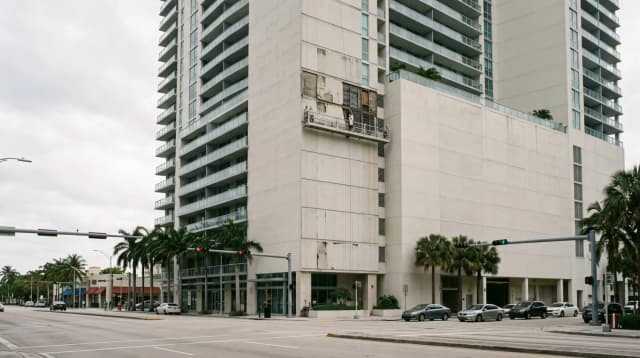
Three assessments, three different answers from your policy.
Sometimes. A Florida unit owner policy must carry at least $2,000 of loss assessment coverage, and it responds when the assessment comes from a loss the association's policy covers. It does not respond to a façade, a roof or a structural integrity reserve study. Those are maintenance obligations, not losses.
In November 2024, owners at 1060 Brickell were handed a $21 million special assessment — some of them for more than $40,000 each — to pay for façade work on Tower 2, a roof replacement and pool deck restoration. The building was sixteen years old. It was nowhere near the age that triggers a milestone inspection, and it did not need one for the bill to arrive.
Most of the owners who call us after a letter like that believe they have coverage for it. Some of them do. The difference is worth knowing before the letter arrives, because by then nothing about your policy can be changed.
The assessment nobody's policy covers
Start here, because it is the answer most people are actually looking for and the one the industry is least direct about.
If the assessment is to repair a façade, replace a roof, restore a pool deck, or fund what a structural integrity reserve study says the building must reserve, no insurance policy covers it. Not loss assessment coverage, not an endorsement, not a different carrier. The product does not exist.
The reason is structural, not technical. Insurance responds to a loss — a sudden, accidental event the policy names. Deferred maintenance and a legal reserve obligation are neither. Florida requires a milestone inspection of condominium buildings three habitable stories or more by December 31 of the year the building turns 30, and every 10 years after that; a local enforcement agency can move that to 25 years based on conditions like proximity to salt water (Fla. Stat. §553.899). Separately, associations must complete a structural integrity reserve study for each building three habitable stories or higher, and since December 31, 2024 the members of an owner-controlled association can no longer vote to waive reserves for the items that study covers (Fla. Stat. §718.112(2)(g)).
Those are obligations the building owes by law. An insurance policy is not the instrument that pays them, and anyone who tells you otherwise is selling you something that will not be there.
The assessment your policy does answer
Now the part that does work.
When the association suffers a loss its own property policy covers — a hurricane, a fire, a burst main — and the damage runs past what that policy pays, the shortfall comes back to the owners as an assessment. That is what loss assessment coverage exists for.
Florida's floor is $2,000
Every individual unit owner's residential property policy issued in Florida must include at least $2,000 in property loss assessment coverage for all assessments made as a result of the same direct loss, with a deductible of no more than $250 per direct property loss. If a deductible was already applied to other property loss you sustained from that same event, no deductible applies to the loss assessment coverage at all (Fla. Stat. §627.714).
Two thousand dollars is a floor written by the legislature, not a limit anyone chose for your building. Against the assessments Miami-Dade has been producing, it is a rounding error. You can buy a higher limit, and the cost of doing so is small relative to almost everything else on your declarations page.
The assessment that lands in between
Here is the case most likely to actually happen to you in Miami, and the one where the answer turns on a detail almost nobody checks.
Your building takes hurricane damage. The association's policy pays, but the policy carries a deductible — often a large one, because the board sets it at a meeting based on available funds and assessment authority (Fla. Stat. §718.111(11)(c)). That deductible has to be paid by someone. It comes back to the owners as an assessment.
So: does your loss assessment coverage pay for an assessment that exists because of the building's deductible?
The sublimit, and the date that decides it
It depends which edition of the endorsement your policy carries.
The 1991 edition of the standard ISO loss assessment endorsement, HO 04 35, says this in plain words:
"We will not pay more than $1,000 of your assessment that results from a deductible in the policy of insurance purchased by a corporation or association of property owners."
One thousand dollars. Not the limit you bought. If you raised your loss assessment coverage to $50,000 and the assessment traces back to the association's deductible, that older form pays $1,000 and stops. The 2000 edition carried the same restriction.
ISO's 2011 revision of the endorsement removed that sublimit, so the full limit you purchased applies. But carriers are not required to use the current ISO edition, and some write their own forms entirely.
Which means the question is not do I have loss assessment coverage. It is which edition do I have, and the answer is printed on the endorsement itself, in your own policy documents.
And the deductible is a common expense
One more thing worth knowing before you pay anything.
Florida is explicit that all property insurance deductibles, and other damages in excess of the coverage under the policies the association maintains, are a common expense of the condominium (Fla. Stat. §718.111(11)(j)). The statute carves out damage caused by a unit owner's intentional conduct, negligence, or failure to comply with the declaration or the association's rules — but absent that, the deductible is shared, not charged to one unit.
If your association is billing the hurricane deductible to you individually and no one has alleged you caused the damage, that is worth a question before it is worth a check.
What the rules actually say
- Milestone inspection, SIRS funding, façade, roof, pool deck: No. Not a loss — a maintenance or reserve obligation.
- Assessment from a loss the association's policy covers: Yes, up to your loss assessment limit.
- Florida's required minimum limit: At least $2,000, deductible no more than $250.
- Deductible already applied to another loss from the same event: No deductible on the loss assessment coverage.
- Assessment arising from the association's deductible, older ISO form: $1,000, whatever limit you bought.
- Assessment arising from the association's deductible, 2011 ISO form: Up to the limit you bought.
- Who owes the association's deductible: A common expense of the condominium, with narrow exceptions.
Sources: Fla. Stat. §627.714; Fla. Stat. §718.111(11); Fla. Stat. §718.112(2)(g); Fla. Stat. §553.899; ISO form HO 04 35 04 91.
Questions we get about this
My association voted the assessment. Can they bill the hurricane deductible to me alone?
Generally no. Florida treats the association's property insurance deductibles as a common expense of the condominium. The exceptions are narrow and all involve a unit owner's own conduct — intentional damage, negligence, or breaking the declaration or rules. If none of those applies to you, ask how the charge was allocated before you pay it.
The assessment is for the SIRS. Is there any insurance for that?
No. A structural integrity reserve study tells the association what it must set aside for roof, structure, fireproofing, plumbing, electrical, waterproofing, windows and exterior doors, and any other item with a deferred maintenance or replacement cost over $25,000. Funding that is a legal obligation, not an insured loss, and since the end of 2024 owners in an owner-controlled association cannot vote to waive those reserves. The honest answer is that this is a budgeting problem, not an insurance one.
How do I find out which edition my endorsement is?
It is printed on the endorsement, usually as a form number and a date — HO 04 35 followed by four digits. Pull your policy documents and look for the loss assessment endorsement. If you cannot find it, your declarations page lists the forms attached to your policy, and your agent can tell you in a minute.
I raised my limit to $50,000. Am I covered for $50,000?
For an assessment arising from a covered loss, yes, up to that limit. For an assessment arising from the association's deductible, it depends entirely on the edition of your endorsement — $1,000 under the 1991 and 2000 forms, the full limit under the 2011 revision. This is the single most common gap between what people believe they bought and what the form says.
My building's policy did not cover the damage at all. Does loss assessment help?
Loss assessment coverage responds to assessments arising from a loss, and the perils it answers to follow your own policy's terms. If the association's loss was flood, that is its own question with its own answer — flood is a separate policy with its own waiting period, and so is the association's. Read what the building actually carried before assuming where the gap is.
How long do I have to report an assessment once it is voted?
That is a different clock, and it has its own answer — see the deadlines for reporting a claim in Florida. Knowing that your policy pays does not help if the window to say so has closed.
If you just received an assessment
The useful move is not to argue with the letter. It is to read two documents side by side: the assessment notice, which says what the money is for, and your own declarations page, which says whether your policy has anything to say about it.
Those two documents answer the question. Everything else is guessing.
We Insure Downtown Miami is an independent agency in Brickell. We look at where your unit sits, what the association's policy actually covers and what it excludes, where the building's policy ends and yours begins, and — for buildings like the ones on this street — what high-rise and condo coverage has to account for.
Have us read your declarations pageThis article describes how Florida's condominium and insurance statutes generally work, and what a standard industry form says. It is not advice about your policy or your building, and reading it does not replace someone reading your documents. What your contract and your declaration say is a separate question with a different answer.
Sources: Fla. Stat. §627.714 · Fla. Stat. §718.111(11) · Fla. Stat. §718.112(2)(g) · Fla. Stat. §553.899 · ISO form HO 04 35 04 91 · CBS News Miami, November 18, 2024.