

Policy review · Miami-Dade
Does your policy still fit how you rent?
A rental property earns income, and the policy on it should match how you actually rent it. This review reads what you have now: what it covers, what it assumes about the property, and what's worth checking before the next renewal. Romina does the review at no cost.
This is a property that pays you
Most rental properties get insured once, the way an owner insures a first home, and then nobody looks again. The lease changes. The roof ages. A tenant moves out. A second property shows up. The policy stays exactly where it was. This review is the look nobody took.
Request your review
Review my landlord insuranceWhy rental owners come here
Independent agency
Not tied to any one company. Compares more than 200 carriers through the We Insure network. What matters here is whether the policy was written for a property that is rented out.
The agency's own count
Local knowledge
Brickell, Downtown, Miami Beach, and hurricane season: the questions that come up here and almost nowhere else.
One person, start to finish
Romina reads the policy, answers the email, and takes the call. Nothing gets handed off.
How the review works
- 01
You answer the questions
A few minutes. If something is missing, Romina asks you directly instead of sending you back to start again.
- 02
Romina reads what you have
She reads the current policy against the lease: how long the tenant stays, what the lease puts on you, and what it leaves with them. This is the part that takes time.
- 03
You decide
You get a plain answer with what she found. Whether anything changes is your call, and often the answer is that nothing needs to.
What's worth checking as a rental owner
None of this defines what a policy covers; that's in the policy itself. These are the questions worth asking before a renewal, and the ones Romina goes through with you.
Does the policy know this is a rental?
A property with a tenant in it isn't the same risk as a home the owner lives in. The first thing to check is whether the carrier was told how the property is used, and whether that's still how it's used.
What does the policy say about rental income?
If the property becomes uninhabitable for a stretch, what does the policy say about the rent that stops coming in? Worth knowing the answer before you need it, whatever it turns out to be.
Where does your coverage end and the tenant's start?
What the policy is expected to do about the tenant's belongings, and whether the lease requires the tenant to insure their own. Those two questions are usually answered in two different documents.
How much has changed since the last look?
A new roof, a renovation, a new tenant, a change of use. Any of those is worth a review, and none of them comes up on their own with the carrier.
If you own more than one
Owning several rental properties doesn't automatically make insurance cheaper. What does change is how much work it takes to keep them straight.
One conversation instead of four renewals
Renewal dates land all over the year. Going through them together means checking once rather than reacting four times.
One person who knows all of them
A question about the third property doesn't start from scratch.
A list you can actually see
What's insured with whom, what renews when, and where they differ. Most owners with several properties have never seen that in one place.
Not every rental question is this one
A lease of thirty days or more, and a tenant who isn't you. Change either half of that and you're in a different conversation:
It isn't a short-term rental review. If your guests stay less than 30 days, the policy is different and so are the questions: the short-term rental review
It isn't about the home you live in. If you live in the property: what a homeowners policy covers
It isn't a review of a condo association's master policy. If you rent out a unit in a building and the question is what the association insures: the condo insurance review
It isn't renters insurance. That's the policy your tenant carries on their own belongings, and it's a different contract: renters insurance in Miami
It isn't a map of the four situations. If you're not sure which review fits: the four policy reviews
The risk is local
Wind, water, and age are what move a property's condition in Miami-Dade, and they behave differently here than a hundred miles north. What a carrier asks of a building in Brickell isn't what it asks two counties up.
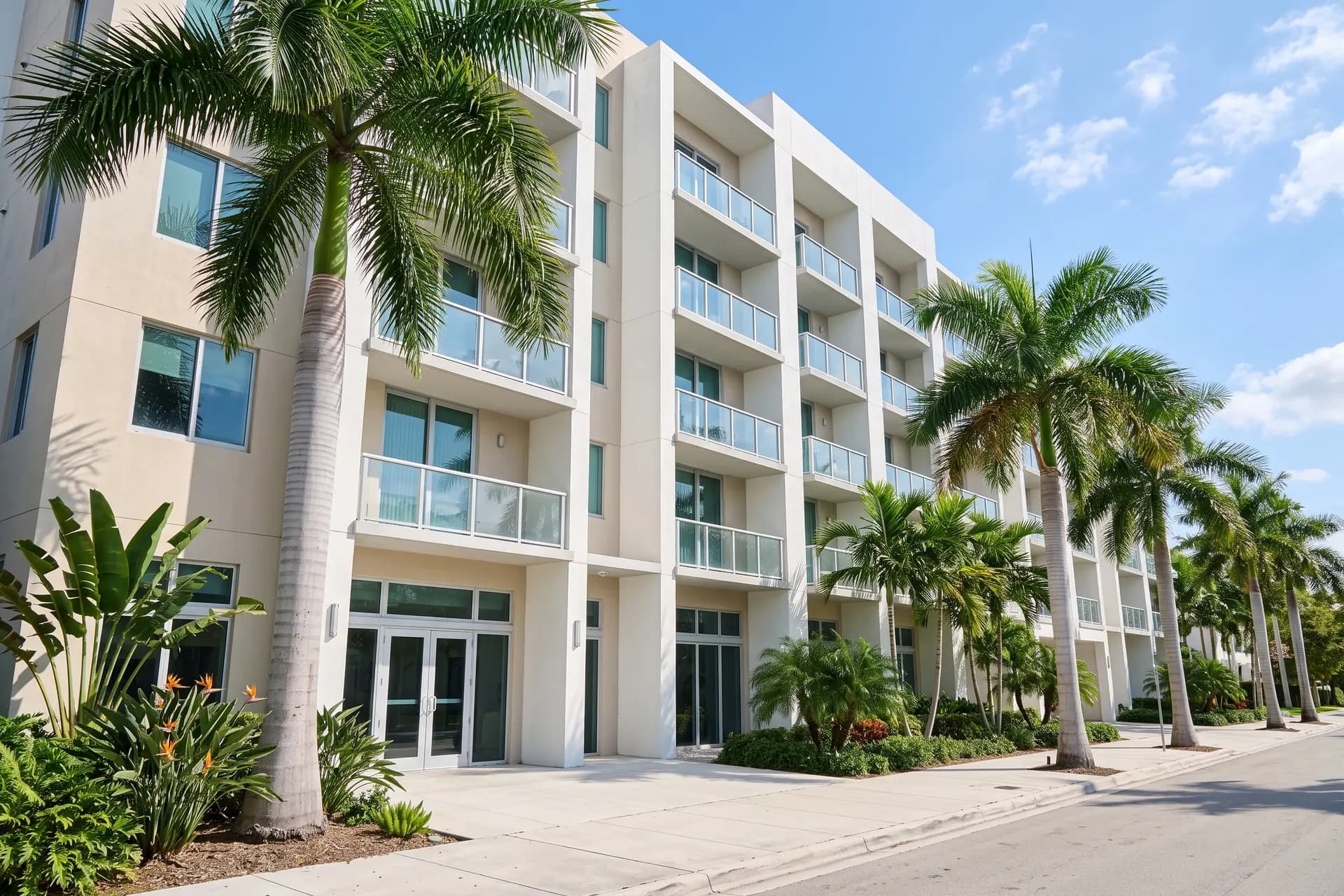
The policy was written for the property. The question is whether it was written for how the property is used now.
Questions from rental owners
- I have more than one rental property. Can you review all of them?
- Yes. Romina asks how many when she gets back to you, and goes through them in one conversation rather than one at a time. Having several doesn't change what the review costs, which is nothing.
- I rent it out for short stays. Is this the right page?
- Probably not. If guests stay less than 30 days, the short-term rental review is written for that, and the link is in the section above. If it's some of both, either page reaches the same person, and Romina asks which when she gets back to you.
- My tenant has their own renters insurance. Does that change my policy?
- It does not replace yours. Your tenant's insurance is for their belongings and their responsibility; the building, what is yours inside it, and your responsibility as the owner stay on your policy. The review looks at both together.
- The property sits empty between tenants. Does the policy still fit?
- That depends on how long it sits empty and on what your policy says about it. A stretch without a tenant is one of the things a policy can treat differently, so it is worth reading before it happens rather than after.
Have someone who reads these every day read yours
It costs nothing, it commits you to nothing, and at the end you know what the policy actually assumes about your property.
About this page
Coverage, requirements, and pricing vary by carrier and by policy. Nothing on this page is an offer of insurance, a statement that you qualify for any coverage, or a promise about price, including for owners with several properties. What each policy covers is defined in its own terms. We Insure Downtown Miami is an independent agency, and a licensed agent confirms what applies to your situation.