

What you gain and lose by putting home and auto together
Changing or combining policiesWe Insure Downtown Miami
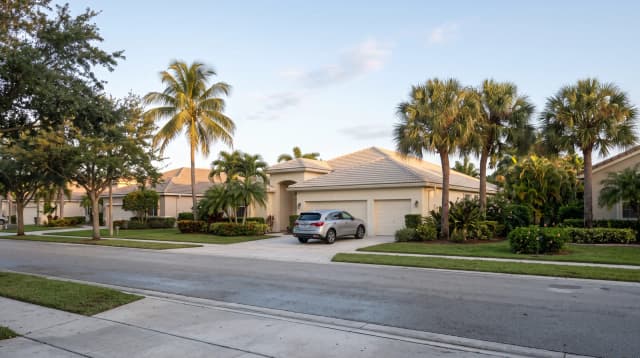
Bundling is sold as one thing: a discount for putting two policies with the same company. That part is real, it varies by carrier, and no law sets it — which is why this post does not publish a single percentage.
What almost nobody explains is the other half. Concentrating your policies with one insurer changes how they behave together, and Florida law contains at least one rule that only exists because of it.
The rule that only applies if you concentrate
Here is the part worth knowing before you consolidate.
Section 627.701(5)(a)4 of the Florida Statutes says that if there are hurricane losses in a calendar year on more than one policy issued by the same insurer or an insurer in the same insurer group, the hurricane deductible shall be the highest amount stated in any one of the policies.
Read that again with two properties in mind. If you have a house and a condo with the same carrier, and one of them carries a higher hurricane deductible than the other, a storm year does not let you use the lower one. The highest one governs.
That is not an argument against bundling. It is an argument for knowing what you are joining together before you join it — because the number that ends up applying may not be the number on the policy you were looking at. How that deductible works at all is its own subject: how the hurricane deductible works on a Florida policy.
The two lines are not governed the same way
The second thing concentration hides is that home and auto sit under different rules, and putting them in one envelope does not merge them.
Notice of nonrenewal. For a personal lines residential property policy, section 627.4133(2) requires the insurer to give written notice of nonrenewal, cancellation or termination at least 120 days before it takes effect. For a private passenger auto policy, section 627.728 requires 45 days.
Notice of the renewal premium. For the residential property policy, at least 45 days in advance. The auto side has no equivalent.
So the same carrier, on the same account, owes you very different amounts of warning depending on which policy it is dropping. People who assume "one company, one relationship" are surprised by that asymmetry precisely when it matters.
What you actually gain
Being honest about the upside, without numbers:
- One renewal conversation instead of two. Underrated. Most coverage gaps are administrative, not financial, and fewer moving dates means fewer of them.
- One company that can see both exposures. A carrier that writes your house and your cars knows what is in the garage, which occasionally matters.
- A discount. Real, common, and specific to each carrier's filing. Anyone who quotes you a fixed figure for it before looking at your account is guessing.
What you actually give up
- The ability to be priced separately. Your house and your car are different risks. The carrier that is best on one is not necessarily the one that is best on the other, and bundling asks you to accept one answer for both.
- Independence between the two. A claim or a non-payment on one policy is visible on the other side of the same account.
- The lower hurricane deductible, if the policies you concentrated do not carry the same one.
- Leverage at renewal. Moving one policy is a small decision. Moving an entire account is a big one, and the friction of that is real.
The dates are the other half of the decision
Two policies bought at different times renew at different times, and bundling does not automatically fix that. Carriers often align them, and the alignment is usually done by shortening one term — which means one policy gets a partial period and a partial premium, and the numbers you compared no longer describe the year you are about to have.
Three questions to ask before you sign:
- Will the two policies share a renewal date, and how will you get there? A short term to align them is normal. Being surprised by the invoice is not.
- Does the discount apply from day one or from the aligned renewal? These are different answers at different carriers, and the difference is a full term.
- What happens to the discount if one policy is nonrenewed? Concentration makes both policies depend on the account staying whole.
None of these are objections. They are the questions that make the comparison mean something, and none of them get asked when the conversation is only about a percentage nobody will put in writing.
How to make the decision properly
The test is not "is there a discount." It is whether the bundled total beats the best separate combination, after the deductibles are made comparable.
Three steps, in order:
- Price both ways. The bundle from carriers that write both lines, and the best individual policy on each line. Two numbers, not one.
- Line up the deductibles. Comparing a bundle with a higher hurricane deductible against separate policies with a lower one is not a comparison. Adjust until the coverage matches, then look at price.
- Ask what happens if one policy leaves. If the carrier nonrenews the house, does the auto discount survive? The answer is a carrier decision and it is worth having before you need it.
This is exactly the arithmetic an independent agency runs by default, because it is not tied to the answer. A captive agent can only price the bundle one way.
What this post does not answer
This is an article about the trade-off in concentrating policies with one insurer. It is not a recommendation, and it does not price anything.
It cannot tell you whether bundling is cheaper for you: that depends on your house, your cars, your history and each carrier's filing, and any figure published in the abstract is invented. It does not cover what either policy covers, which is on home and condo insurance and car insurance.
Questions we get about bundling
Is bundling always cheaper?
No, and the honest answer is that nobody can tell you without running both. The discount is real; whether it beats the best separate pair is an empirical question about your specific risks.
I saw a chart of bundling discounts by company.
Treat it with suspicion. There is no statute setting those figures, and each carrier files its own. A published table is either out of date, averaged into meaninglessness, or made up.
If I bundle, do I get one deductible?
No. Each policy keeps its own deductible. What Florida law does say is that with hurricane losses on more than one policy from the same insurer or group in a calendar year, the highest hurricane deductible among them governs.
My carrier dropped my home policy. Does my auto go too?
Not automatically, but the discount attached to having both may not survive, and the notice you get on each is governed by a different statute with a different number of days.
I have a car in Miami and a house somewhere else.
Then the bundle is often not available at all, and the question resolves itself. Worth confirming before assuming either way.
Where to start
If your home and auto are already with one company and you have never seen what the separate best-of-breed combination would cost, that is a comparison worth running once — with the deductibles lined up so the numbers mean something.
Get in touch with We Insure Downtown Miami with both declarations pages, or start a coverage review.